
Stop Looking at me

Some background.

I’m a big believer that wearable sensor technology can, and should improve life. I think that with the American healthcare system in the shambles it is, essentially we’re going to be on our own for most healthcare.

I’ve written elsewhere in this blog about the difficulties in finding or seeing competent healthcare professionals.

From Dermatology appointments that are booked 6-9 months out, to primary care physicians that can’t book an appointment until well into the future, with doctors that don’t even speak English well enough for the patient to understand their instructions. The medical industry for various reasons is a complete shitshow.

We needn’t talk about the fact that many primary care physicians these days rarely actually touch the patient. Instead they sit or stand behind their computers being data entry clerks. They’re reluctant to even do the rudimentary action of listening to the patient’s heart. Because the data entry is more important than the actual patient. (Except when it comes to insurance billing. Then they want to know about financial responsibility and next of kin so that they can track the patient down in the event that insurance doesn’t pay.)

Hey men, when was the last time your Doctor did the old “Turn & Cough” routine? How many of you even remember what that is?

How is it that America can claim to have the most advanced healthcare in the world, and yet have some of the poorest patient treatment outcomes?

There are some amazing “saves”. I’ve got a friend that is with us because his wife was dialing 911 before he hit the ground.

On the other hand, I’ve got another friend that got put through the medical wringer during COVID. Because of the delay in treatment, and requirements to be vaccinated. In his case a relatively minor skin cancer, ended up metastasizing throughout his system into lung cancer. (Uhh No, He never smoked.)

I myself have found that obtaining medical routine medical care is a “challenge” (Beware of any politician touting Medicare for all as one of their campaign planks.)

Because I believe that we’re going to be on our own, especially if you’re an average genetic male, one viable alternative is wearable sensors and their ability to provide daily medical data that we monitor ourselves. This kind of data gives us a baseline for our particular “Normal” and deviations from our “Normal” state, can guide us to take care of ourselves. At least it gives us a fighting chance to use the 6 minutes that a doctor is going to pay attention to us, wisely.

I picture it something like, “Hey Doc, this and this are out of my normal range, what should be done?”

I also think that having reliable telemetry would reduce overall healthcare costs by helping to reduce unnecessary and wildly expensive tests. Who hasn’t had their doctor demand exploratory testing only to find out that the test or tests were unnecessary?

Because I was a believer and willing to do what I could to advance the technology, I started participating in the Apple Health Research program via the Apple Research App. I’ve been doing this for years. The research app asked simple questions, and requested access to medical telemetry from my Apple Watch or other sensors and honestly was pretty darn simple and non invasive in my body or my life. I’d been enrolled in one study for 537 days.

Note I said “Was” and the other uses of past tense.

50 days ago I received an invitation about another study. This one was a little more involved. Nothing that I wasn’t willing to do, even including the study requesting some blood samples. Fine, I’m willing to bleed for my belief that technology is going to make us more independent of the “Medical Industrial Complex”.

Oh, I use that term with purpose.

By now it’s become painfully obvious that the Medical industry is nothing more than a mechanism for generating obscene profits, and in addition, the medical industry is probably as much about control of a populace that doesn’t ask questions. Those of us who do ask questions in an attempt to understand why a particular treatment is better than another, are listed as “Difficult Patients”. Once designated with this label, you’ll find your overall care is significantly degraded. Independent thought, or questioning the Arch Practitioners of arcane medical arts is seen as heresy. People who question, should be put into camps to die, right? Reference events from 2020 – 2024. There were entertainers, pundits, wags, and even some politicians, who said that kind of thing live, on air. Often to “seal claps” of a wonderfully compliant audience.

That kind of thing made my blood run cold, and fueled my desire to assist any real research. My hope was/is at least the technology could be improved allowing average, and reasonably intelligent people to use it to their advantage, providing hard data about their own bodies to push back against a medical person or establishment trying to railroad them into some treatment that was questionable. Or worse, touted as the only treatment available when there were other equally effective treatments that their physician simply didn’t like.

Oddly, if you look at outcomes, the key differentiator between one treatment and another often boils down to money. Either how much the insurance company will pay, or how much profit the hospital or clinic can derive. Many times, the patient outcome is the same, plus or minus a few percentage points.

So I was in. I signed all their paperwork, I noted that they were willing to pay a small amount for participation but that amount was trivial.

A week or so later I got an email confirming an “On boarding” appointment. That email contained a link to a website. Okay… The link required that I create an account. Hmm it’s just a teleconference appointment. I can set one of those up on FaceTime, or Half a dozen other services wherein only the administrator of the teleconference needs to have an account. The participants don’t have to provide any information whatsoever. All they need is a conference ID number.

Then I thought about it and remembered that because medical data is protected under HIPPA, they might need some kind of more secure conference. Okay, I created an account. I didn’t like it, but for the sake of the research it was probably worth it.

The conference day comes and I’m logged into the video site. The person on the other end of the call asks a bunch of questions and such. None of which were any different than something I’d tell a stranger. They walked me through changing a few settings regarding permissions on my phone so the research app could read that data, then the conference was over, and I was in.

Immediately, my phone started burning 10 – 15% more power per day. This was because the study was accessing my phone’s camera every single time the phone was moved. The theory was that they were trying to capture and process facial expressions and face shape using the onboard AI. I suspect there were two points to this image capture. One, was to insure that the phone was only being accessed by a single person. The second reason was to try to capture data that could be correlated to the mood of that person throughout their average day. (Was the person stressed, depressed, angry, sad, etc.)

The first issue was kind of dumb. If the person was only moving the phone but unable to unlock it, then they weren’t an authorized user. Any additional data captured about the person’s expression or facial shape was therefore moot. It would have to be excluded from the study data.

The second issue might have made more sense if the analysis only happened after the phone was unlocked. Trouble was, the study was burning energy capturing photos of the inside of hand bags, backpacks, ceilings, and back pockets. The analysis literally activated if I slid the phone out of the way to make room for something else on my desk or counter top.

I’m pretty sure the camera was active the entire time the phone was in my back pocket while I was walking the dog. I don’t know for sure, but I can say that the camera was active even before I unlocked the phone to read a text message or answer a phone call. So what valid data was the study actually getting?

How much of that data was going to be fed into some processor to refine the newer generation of cars that supposedly won’t allow you to drive them if an AI in the car decides you’re too angry, stressed or otherwise impaired to operate a vehicle?

I can tell you from experience, that transporting a loved one to an ER I was extremely stressed and very focused (You kind of have to be, doing 90MPH on a Southern California freeway where nobody obeys the “Slower traffic keep right” rule).

The last thing I’d tolerate in that situation was an AI in my car refusing to let me get a person to an ER. I’d be so pissed when I got back from a $300 taxi ride, or paying $500 to an ambulance that I’d go at an AI in my car with sharp objects and a soldering iron. Asinine Federal safety laws be damned!

This realization gave me pause about my participation in the study. I however continued.

Weeks go by and I grudgingly tolerated my phone “looking” at me & draining power no matter the situation.

Then came the email from the study. It was an email, that told me I had an email. You know the kind I’m talking about. We get them from our mortgage companies, insurance companies, and banks all the time. “Oh you have a message, login to your account to read this important message.” Then you log in and the “important” message is that interest rates have changed on your savings account. Duh, we all already knew that because the Prime Interest Rate was changed, or stayed the same, or another quarter closed.

In other words the important message could have been sent via normal email and didn’t require special handling.

I knew what the email from the study was. It was most likely a lab order requesting that I make an appointment to go have some blood drawn for the study. Since the study itself was a double blind study. It’s entirely likely that the name was a number, the billing code was one that belonged to the study, and the requested testing was a standard panel. None of which required security. In fact the message could have been sent to any modern email program fully encrypted if the study had simply provided a PGP or RSA key during the initial setup/onboarding.

To make matters worse, whoever sent the email, didn’t send a link. What they sent was an entire HTTP file that opened a page locally in my browser. Because the page had been opened locally with no connections to the actual server it was supposed to open on, the page failed. My email program had dutifully tossed the entire email into my “Junk Mail” folder because that is exactly the kind of behavior scammers use to trick people into resetting passwords and user names.

I, on the other hand knew what I was looking at, and pulled the file apart until I found that it was supposed to be a link to a secure CISCO Mail delivery program. I accessed the server properly and was presented with… You guessed it, “Hey you need to create another account. Please provide a unique user ID and a 12 character password. Don’t forget, your password must have upper and lower case characters, numbers, and at least 2 special characters.”

I tired using the unique user ID and password from the video conferencing account. No Joy! That was a different format. Then I realized I hadn’t used that conferencing account more than once. I wondered, “just how many accounts am I going to have to create and maintain with forced password changes every 90 days, for this damn study?”

I jiggled my phone on the desk putting down my morning coffee. My phone took a clear unobstructed 45 second long picture of my ceiling.

At that point, I’d had enough.

The research app has communications built in. My email has encrypted communications built in. My phone is burning power to no good end, and I wondered how many pictures they had of my private parts.

I was perfectly willing to be inconvenienced by going and having blood drawn but I wasn’t interested in some unknown number of accounts needing to be created in service of this study. I’m trying to minimize my digital footprint, and all these people were doing was expanding it.

Every single user ID and password these people wanted was another opportunity for some shithead hacker to get information they could use to screw me. And it was painfully clear that the people running the study weren’t particularly good with technology.

So I withdrew from not only the new study, but every study these people were running. If they can’t handle the basics, how can they be relied upon to correlate the data?

Then, I deleted the Research App from my phone.

The next day, I got a call from a lovely lady asking me if I’d gotten their email about my upcoming blood draw. “Uhhh yes I did,” I replied. She asked if she could help me set up the appointment and I said, “Uhh NOPE! Then explained I’d withdrawn from the study.”

She thought I’d withdrawn because I was afraid of the blood work. I explained that wasn’t the problem. Then explained what the problem(s) were. I continued, I as an older person had no interest in multiple accounts just to support their study and that perhaps they’d be better served having a single web page that supported all the necessary functions required by the study. I also pointed out that I was sure they’d gotten some lovely photos of my ceiling, my back pocket, and the inside of my backpack. I added I’m sure that someone was equally thrilled to have pictures of my “Johnson” too since I tended to be nude, surprisingly, in my own home, and my bedroom, in particular.

She was understandably flummoxed.

She recovered well, and pointed out that the call was being recorded. I said, “Great! Then there will be no confusion about why I dropped out.” I asked her to make sure the IT people, in particular those that came up with this insanity rethink their approach. While I’m willing to share information with them, I’m not interested in having my participation in their study become a full time job involving an unknown number of “Surprise” accounts that have to be created, just to deal with the basics.

She said she’d refer the matter to the IT people and that she’d initiate the payout for my contributions to the study.

I said, “That’s fine. The money isn’t important but a clean efficient study is.”

This morning, I got a call from the study payout group. Another lovely lady wanted to verify my email address because they were going to send me a “Virtual” debit card that would be loaded with $70. She went on to tell me that this card could be used anywhere, or that the funds on it could be transferred to my bank account or Apple Pay account.

“Okay, that’s fine,” I said. A minute later I got an email from the study payout group. They directed me to a website where my “Virtual” debit card awaited. Then I got another email saying that the debit card had $70 on it.

Sure enough, there was the card, and it claimed to have $70 loaded on it. But there was no way to transfer the amount anywhere. No matter, I had the number, expiration date, and security number.

I tried to use the card online to pay a couple of subscriptions.

I couldn’t.

While puzzling over why I couldn’t use the funds. I noticed the following in the terms and conditions.

Unless otherwise specified, not redeemable for merchandise, food and beverage. Allpurchases made with this card are subject to the applicable refund and exchange policy and the amount of ClinCard’s any refunds will be placed back on card. Not redeemable for cash except where required by law. Not reloadable. Not a credit or debit card.

There was also a helpful 1-800 phone number.

I called it. It was a Canadian Bank. After navigating through their phone tree I got a helpful person to whom I explained the problem and quoted the text above. Then I asked so what is this card good for?

He didn’t know. He helpfully suggested that I keep trying random sites until it worked.

Either it’s money or it’s not… I didn’t go into that with him.

I asked how I might transfer this cash to a usable platform.

He responded that I could go to their website or download their app, open an account, provide my banking information, and then I’d be able to transfer the cash to another account.

I fired back, “So you’re telling me that to get this $70, I’ll have to give you all the information necessary for you to steal my identity and since you’re in Canada international law applies, meaning that my privacy is not secure under even the most minimal laws of the United States and any disputes will be handled under EU rules or would that be under Canadian rules?”

He had no response.

So ladies & gentlemen, that’s how I made $70 selling my body and how that $70 is in no way real.

Beware virtual debit cards!

I rather suspect they’re nothing more than a mechanism to turn us all into data products to be sold to the highest bidder.

It’s a great scam if you think about it. These people offer you money you can’t access, then tell you to access those funds they’ll just need a little bit more information. When you give them the information they’ll give you the cash. On the back end, they’ll make 1000 times more money selling your information to data brokers.

The thing is, the clinical study could have texted the $70 to my phone number (which they had on file,) and it would have been loaded automatically onto my Apple Cash card. That would have cut out the middleman and provided instant payment.

They could also have sent it to Zelle, or Venmo. The accounting would have been no different. They just had to have yet another corporate entity in the mix.

Here’s the recap of corporations:

Apple
Brigham and Women’s Hospital, Harvard Medical School
GlobalMed
CISCO
SUVODA
ClinCard
Greenphire

Really?

And they turned on my phone camera for hours during the day, while using the devices and sensors I purchased to collect information for their study. They in turn, provided literally nothing but annoyance.

To anyone who might be reading this that is in the medical industry, Do Better!

The study cohort invites you into their lives and their homes. They give you information freely and while you claim to “pay” for that information, the reality appears to be much different.

I might consider joining another research study in the future. But I’ll be far more interested in doing so if that study was geared specifically to Men’s health issues. Right at the moment, I’ll be leaving the Apple Research application off my phone.
Microsoft, you’re dead to me.

There’s an article from Nikkei Asia saying that Microsoft will be investing 17.5 billion in Indian data centers. 

Fine, meanwhile back home Microsoft is laying off 9000 American workers while bringing in 6000 H1B workers.

Windows 11 and the recent “improvements” to Office have made both annoyingly complex to work with. There are a lot of companies that rely on Google’s cloud based office type products instead of paying the fees for Office.

If that’s the direction, then your desktop computer is becoming nothing much more than a terminal to the cloud. 

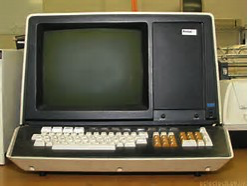
Old terminal.I’m old enough to remember a time when terminals to IBM 360s or DEC systems were the norm and desktop computers were the rarity.
In those days the terminals had zero computing power and the Mainframe or Mini computer was housed in the corporate data center in the basement.

We’re slowly coming full circle.

In the early days, desktop computers were a “Threat” because each computer could have data on it that was not backed up and that the corporate data center had no control over. The advent of networking, servers, and distributed corporate systems ended the days of the Mainframe operators holding department data hostage until they got around to processing it.

Now the “Cloud” is replacing corporate servers and in many ways it makes sense.

Cloud based computing means that the data is once again all in one “Thing”. Desktop and laptop computers don’t have to be as powerful, they don’t need as much memory, or hard drive storage. Corporations don’t necessarily have to have servers on site and overall it means the cost of operation is cheaper.

It makes sense. In fact, I’d imagine that a corporation can get away with a smaller IT staff too. There’s also the matter of data security. 

Most of the data breaches that I’ve been involved with were caused by someone carrying data on a laptop that got stolen.

The data shouldn’t have been on the laptop in the first place. These breaches were usually caused by an HR moron who thought they needed the entire unencrypted employee database with them at all times.

Although there was one breach that originated in a freakin StarBucks. That too was an HR moron, drinking her latte who clicked “Accept” to enable communication from an unknown person via a messaging application. In that case she dumped the entirety of  corporate emails, the employee database and her own financial data to a “BlackHat” who then sold the data to fraudsters.

She lost her job, after trying all the usual excuses, “I didn’t know, I didn’t understand, Well having the data on my computer was easier, blah, blah, blah…

The company lost it’s edge since all of the projects and hiring needs associated with them were public knowledge. The company employees were poached by competitors and shortly thereafter the company itself went out of business.

Turns out, “Loose Lips sink ships”. Who could have known that?

From a security and maintenance standpoint I can see the allure of putting everything in a secure cloud. If indeed the cloud is secure. 

I question that security with data centers, wherever they are located. Physical access to even a Cloud server allows for the data to be stolen. So the data center itself presents an access point for thieves. Security is about minimizing risk, but nothing is ever totally secure.

I suppose blockchain encryption would make the data simply too hard to crack but if the data is at any point unencrypted, it’s game over.

Which brings me to Microsoft and its Indian data center.

The problem with cloud storage is that you don’t know where your cloud storage physically is. I personally don’t like having my personal data floating around in India. The vast majority of scammers happen to be located in India. The possibility of my data being stored in a cloud, located in India worries me. 

How long until some scammer goes to work at the data center and plugs in some device that creates a breach? It would be a gold mine!

No more stupid phone calls to elderly people getting their bank account numbers. No more silly screens popping up on computer screens claiming, “Your computer has been infected”. 

The data just flows out of the Cloud data center un-noticed, and boom a million people suddenly have all their personal data exposed and being used for criminal purposes.

But there’s another aspect to Microsoft firing American workers and replacing them with H1B workers, in addition to having potentially criminal people with common interest at both ends of the data pipeline.

It’s their programming style. 

Windows 11 and Office do not use typical American thinking.

Americans tend to think and act directly. We generally don’t have the patience to dig through misnamed or misleading menu items.

If we’re looking to highlight a block of data then transform it, we expect the transformation options to be at the top of the menu we open. Indian programming is much more florid.

If we ask what time is it, we’re not interested in specifying what time zone we’re in, nor are we interested in the history of horology. Just tell us what time it is.

Windows and Office have become far too florid providing endless options and nuance when we want to do something simple. Their copilot AI is always prodding and suggesting instead of getting out of the way to allow us to change a damn font, or paragraph style. I don’t want to review the paragraph, or re-contextualize, summarize, or re-write it. I wanted to justify it left and right.

Word for example had become too “Busy”. In my case it got to the point that I’d write something in a text editor then open it in Word and apply formatting. The reason was that all the little highlights, and suggestions actually distracted me from what I was trying to put on paper.

Even WordPress has gotten too annoying to use in live mode. Most of my blog posts, I’m writing with an older style program because WordPress “Blocks” are a pain in the ass if you want to insert graphics. It’s easier and more direct for me to write and insert graphics in the older style than play around with inserting a graphic as a block then resize it, then flip through 3 menus to place it.

This is coming from a guy that knows at least half a dozen desktop publishing programs, and has published periodicals, manuals, and books.

When I want a desktop publishing application, I’ll choose to use a desktop publishing application and access all the power of that application. For a normal letter, email, or blog. Just let me put my thoughts on paper. If I want additional input, I’ll ask for it.

Apple is heading in the same direction and at some point I can see myself eschewing Microsoft and Apple OS in favor of something like Unix or Linux.

I’m not saying that Indian programmers are bad, (I don’t particularly like working with them, because its sometimes annoying and difficult to communicate simple issues,) I’m saying that their thought process is overly complex and that translates to a level of complexity in their programs that I don’t like.

Trite as it sounds, I prefer an America First method of programming. 

Simple, direct, straight forward, minimalist, and functional.

command prompt.PNGIn many ways, I miss the old days of a Terminal interface.

I deleted Windows 11 from my emulation program on my Mac. I don’t recall how long ago that was, but I’ve not missed it or had need to use Windows 11.

Similarly, I didn’t renew the subscription I’d had for Office sometime last year. Again, to my surprise, I found that I didn’t miss Word, Excel, Powerpoint, or Microsoft Mail. All of them had become too weird, too complicated, and frustrating.

I realized that I’d actually stopped using the Office applications because more often than not, I just wanted to do something quick and knew that whatever I wanted to do was gong to take far longer than necessary if I used Office.

In many cases, using the built in Apple TextEdit program gave me formatting and font selection that was more than sufficient for a quick letter. I didn’t even fire up Apple Pages. So when Office renewal came due, I thought, “Why am I paying $99 a year to be annoyed and frustrated when writing a simple letter? Moreover why am I paying for applications that are bloated, (typically 1GB or more) that are not my ‘Go-To’ applications?”

That was the end.

As an aside, Windows 11 also contains a decent text editing program, baked in.

Microsoft, firing Americans, then hiring H1Bs is simply the icing on the cake. I know there are those who’ll say, “But dude, you’ve got to know Office applications.”

Really? Considering that I’ve used every version of Office, since before they were bundled and started with word processors going back to old IBM MTSC systems. Plus I’ve done typesetting and publishing, I think I’ll be able to catch up if, in the unlikely event I get a job that required me to use the Microsoft Office suite. Unless they start writing the menus in Hindi.

Thinking about it Microsoft hasn’t done much in terms of really new or interesting things is a while. I guess that’s why typically I don’t think about them unless I see an article about them, or I run into comments in computer journals complaining about Teams, or Copilot.

Apple should probably take note. 

It’s actually possible to program yourself into irrelevance. OS27 had better be a clean up of bugs, and a simplification of operation across the OS and all the Apple features & Apps.

Otherwise, Mac hardware will be of little value if everyone can buy an Intel PC for $100 then put Linux on it & have a simple, functional and powerful OS without all the bullshit.

Just a thought.

Apple enabled their digital Passport ID in Apple Wallet yesterday.

Uhh.

Yeah, no…

I’m not interested. In the year that I’ve had the California digital ID I’ve not had one single situation that it was useful. 

Nada, Zero, None.

Aside from the slow rollout of digital ID on a state level, it appears there’s an even slower adoption rate among vendors. I wan’t expecting it to be used in every liquor store or anything.

But it would be really useful in medical situations, where the paradigm is you hand your ID to some medical clerk who then makes a photo copy of your physical ID then stick that in a file someplace. Although now medical providers want you ro scan your ID and upload it to them yearly.

Or in situations like a cellular provider who wants you to scan and upload your ID to their website.

You’d think that at least in those situations, the security aspects would be obvious and quickly adopted. 

There is the capacity for their website to get the information directly from your phone in a secure tokenized format that only provides the necessary information for their purposes and nothing else.

In the glitch I had with my watch, I lost the California ID that could be presented via the watch. California apparently has no provision to correct that. Instead they keep directing me to a verification web site page that’s not complete. The page says something like “We’re working to get this page operational please check back later.”

I just deleted the mobile license from my watch, because the notification to go to a dead California web page appearing 2 or 3 times a day annoyed me.

The ID is still available on my phone for what it’s worth but since it’s a pointless bit of data, I’m seriously considering deleting it.

Why bother?

Now you can put your passport information in your phone too. But that information is only useful at few TSA checkpoints at scattered airports across the nation. It can’t be used at border checkpoints to enter the country.

So really what good is it?

It’s an interesting little novelty widget, nothing more.

Digital ID has so much potential. It’s a pity it’s not received enough adoption to make it worthwhile.

I fully acknowledge the darker side of digital ID. One only need look at China to understand the dystopian down side.

I appreciate the idealism of digital ID. I’d be very excited if it was widely used in voting, medicine, medical insurance, and as we have recently come to understand EBT/Snap welfare benefits. I think that it could make a hell of a dent in fraud. With the biometric aspect it’s a no brainer in these situations.

However, it’s pretty obvious that the political party that consistently votes against any form of ID being required to access these services would fight tooth and nail against it. They’d make the case that not all the “Poor” have access to phones with the capability. Just as they now say not all the “Poor” have the intellectual ability to get an ID. 

Even though, those people, that party, claims are intellectually deficient, typically have the latest and greatest phone technology which they use constantly to post their TicTok and instagram videos of criminal behavior including threats, or looting & rioting.

It should be noted that in order to get those phones and phone service, they have to provide ID. That’s interesting too because it was that Political Party that voted for IDs to be required if someone chose to purchase a phone with a prepaid plan. Also known as a “Burner” phone.

I’ve come to suspect that the Digital ID thing will slowly fade away at least in this country.

I think this for a number of reasons:

1) There are a lot of people that do not trust our government.
2) I think the digital ID thing is seen as an impediment to getting a new phone. Do you have to re-register the ID’s with the issuing authority every time you change devices? [You don’t as a rule, but the issuing authorities would love that for tracking purposes]
3) Without wide acceptance and use on the part of vendors it’s a nothing burger.
4) Since even Law Enforcement isn’t using the system, requiring the user to carry the physical ID what’s the point?
5) Unless you travel weekly for business you’ll never encounter any situation that the digital ID is used at all. Since even the TSA can’t guarantee that their kiosks are operational at an airport on any given day, a physical ID is still necessary.
6) China’s example of social credit scores, where they use digital ID to absolutely destroy individuals because they said or did something the Chinese government didn’t like.
7) The UK is implementing digital ID and following China’s lead. The people in the UK, while generally compliant to their government’s commands have begun to fight because they see that misuse of the ID abridges their freedoms. The UK is even trying to implement digital IDs for visitors. Though they seem to have a rather large blind spot when it comes to “Asylum Seekers”.
8) There’s the religious overtone about everyone having “The Mark” and being unable to buy or sell unless one has “The Mark”. (As China has demonstrated.)
9) There’s the conspiracy theorist angle that encompasses all of the above and suggests compliance is enslavement. One could argue that we’re already enslaved, but digital IDs simply make the fact of enslavement “In your face”.

For someone like myself who genuinely believed that all the technology I helped to create would benefit humanity this is a depressing turn of events.

The potential for good, is so appealing. Back in my youth, I naively thought that people would choose good over the dark side. “History be damned,” I thought. “Surely we’d learned from our mistakes and wouldn’t choose that dark path again.

As I said, I was idealistic and naive. 

I’m even doubting that I’ll renew my passport when it’s due. There’s no place I want to go to visit anymore. That could change, and I have time.

If however, I chose to expatriate I’d not need a passport. All I need do is illegally enter another county claiming political, or economic asylum, with no ID. That seems to be all the rage these days. One need only look at the piles of ID’s floating in the Mediterranean, or stacked next to the Rio Grande.

For someone like myself, who’s actively trying to reduce my digital footprint and minimize my financial entanglements, digital ID has become a non-starter. I want to fade away, drop off the grid and live free.

The way we’re hooked into the system, has in the past week been underscored by my health insurance provider. I used an app (of course) to try to renew a 90 day prescription. Several hours later the app informed me that the prescription was delayed. Several hours after that, I got a call from the insurance provider.

Stupidly, I answered the call, thinking there was some issue on their part about the prescription. I’d just pulled a rare, hot lunch out of the toaster oven and thought the call would resolve the prescription problem and I’d go on with the rest of my day.

Instead what I got was some girl from some organization that was loosely associated with my insurance provider being quite insistent that I needed to set an appointment with someone else to answer questions for the insurance provider.

I explained that I was just sitting down to lunch and wasn’t interested. I asked if my answering questions was mandatory. She was unable to clearly tell me that, nor was she able to tell me what kinds of questions I needed to answer. Nope! She was badgering and demanding about my setting some appointment with a nurse practitioner, wherein there would be a video conference.

FUCK!

I just wanted to eat my now rapidly cooling meal in peace. On and on, circle within circle this girl annoyed me until I finally said, “FINE! Just set the damn appointment! I don’t give a shit when, just do it.”

40 minutes later I finally hung up the fucking phone. I gave the now cold, meal to the dog because I was so pissed off at that point I didn’t feel like eating.

(Note to self… Next time don’t answer or when the annoyance level reaches “pissed off” just hang up.)

Within minutes, my phone was blowing up with multiple text messages asking how I felt about that phone call, confirming the appointment, and telling me that there was going to be other confirming phone calls, about the appointment, and that I must go to their web site to verify that my technology would accommodate their video conferencing standard.

I don’t take orders or demands very well. I never have. The more insistent or demanding someone is, the less likely I’m going to comply. This is particularly true if I see no direct benefit to me.

In this instance I don’t see any direct benefit and have come to believe this whole thing is nothing more that these folks finding a way to bill for services that I not only did not ask for, and that I don’t want.

The other possibility is that the insurance provider is attempting to get information about my health records that they didn’t get from the useless doctor I saw a month or so ago. I’m wondering if they’re wanting to plug my data into some actuarial table for probability analysis to figure out my risk to them, so they can up the billing or demand that I submit to the merry go round of tests, more tests, and yet more tests, then follow up appointments, all of which are designed to drag me into the medical industrial complex so that I spend my retirement years running like a hamster on a wheel for their benefit, not mine.

Last night I got a call from the nurse practitioner reminding me of an appointment today. I thought… why don’t you just ask your questions now lady? Why are you wasting your time and mine? You obviously have time to call me now, why wait till tomorrow?

I know what it’s all about. It’s about racking up check marks in some form on some computer that all translate to billing somehow.

I’ll play along tonight when she calls and I’m not likely to be particularly cooperative or compliant. 

The nurse practitioner was barking orders at me during the confirmation call.

Then I got another two text messages, along with a demand that I sign into their conferencing system 10 minutes prior to the scheduled time.

Uh excuse me? When did I start working for them?

All of this is related to the complexities of systems. Digital ID simply takes a previously working simple system and makes it more difficult to manage. 

Imagine what happens when every single aspect of our lives are bounded by mandatory compliance and demands in service to any corporation or government entity that has access to our information.

How long until everyone must provide hours of their day, (translating to hours of their lives,) dedicated to nothing more than managing who, how, and what, has access to their lives. Imagine a situation wherein any misstep could mean that you don’t get something you need whether you’ve paid for it or not.

This insurance thing is one single aspect. Multiply it by 10 services, all attached to a digital ID and you’ve probably increased the points of failure by 1000.

I still don’t know what the status of my prescription is, and am researching safe ways to get off the drug entirely.

It’s not that I’m not interested in my health. It’s that I have zero trust in government, healthcare, or the common decency of people anymore.

That being said, I see no reason to participate in digital IDs. With the intrusive nature of text messages, cell phones, email, and all the rest of the modern world. I’m wondering if I can ween myself off technology entirely.

I rather like the concept put forward in the Jack Reacher series of books. In those, the main character has, his paper ID, a pension account he accesses via Western Union, and is not tied to any place or system.

He lives a simple unencumbered unconnected life.

That sounds really nice.

Now I’m off to deal with mandatory licensing for the dog, then updating payment methods on accounts for services, then I’ll spend some time on the phone with Apple to sort out some other screwups on my phone created by one of their software updates. Then I’ll have to make sure at least one of my devices has a full charge to be able to join this dumb shit conference call later today. [Honestly, I kind of liked it better when I had no health insurance it was one less thing to deal with.]

But all of this “Only takes a few minutes…”

Minutes that I’ll never get back!

See how that works?

Ya know, Maybe it’s me…

Why is it that Customer Service / Technical Support has gotten to be such a pain in the ass?

I had an issue with my watch connected to my cellular plan. I tried to resolve it and realized I was out of my depth. Going in, I wasn’t frustrated just curious and was hoping for a little clarity and assistance.

During the course of the troubleshooting I ended up speaking with 9 different customer service/technical support people. Three of the calls dropped during troubleshooting, only one of these people called me back. None of them had a fucking clue. Overall, I spent 4 hours on the phone and was worse off than when I started.

For clarity, this cellular company touts that their customer service is US based.

Every single person I spoke with asked for my name, my zip code, my pin, and a callback number. It’s crazy that after I’ve gotten hold of someone that every time they transferred me to a new person I had to give the authentication crap again.

I look at it as once I’m in the system, they’re transferring me internally and from my perspective I’m on the same damn call. 

After the 6th or 7th transfer, repeating the whole story, and having to authenticate gets really tedious!

When I was answering phone calls in a tech support department, I’d solve the problem or I’d stay on the line to hand a person off to someone who could. What passes for “service” in call centers these days is really crappy.

The last call I was on Thursday night, I’d finally gotten to a person who seemed like he might have had a clue and we’d reset my watch to factory defaults AGAIN. Then he put me on hold to check something, and the call dropped.

In the case of a smart watch, that leaves the customer with their device more broken than when they started. He never called me back and oh, their customer service department closed shortly after the call dropped.

I completed the setup of my watch to return it to functional, then went about my evening. The problem I’d called about was still present.

When I called the company the next morning, I went through the whole authentication bit, and explained the problem again then asked to speak with someone who was higher up in the hierarchy who had a lot of experience because the problem was apparently a difficult one that the “normal” troubleshooting steps didn’t resolve.

The woman I was talking to refused my request. Then demanded that I call them back on another phone, other than my only cell phone.

Uhh excuse me?

She said with more than a bit of attitude that I needed to go tie up a friend’s phone line to accomplish troubleshooting and refused to assist me further.

If you’ve read any of this blog, you know that was exactly the wrong thing to say to me.

When it became clear that she wasn’t going to budge. And was giving me attitude about it. I countered with, “Okay, then transfer me to someone that can give me a transfer PIN.”

[Transfer PIN numbers are used when you’re changing cellphone carriers and you’re taking your phone number with you.]

She hung up.

OH HELL NO!

Nuclear-Bomb-Explosion-in-City.jpgWhat could have been a major hiccup, possibly even a recoverable one, was now nuclear.

I called back, got another person, outside technical support, and made my intentions clear then explained why. I was nice. Well as nice as I could be given the situation. I suggested that she make a note of the account and forward it to their sales/marketing department, because this is how you lose customers.

She gave me the PIN. I walked the dog, came home, showered, and drove to the local T-Mobile store.

Don’t get me wrong, T-Mobile’s phone Customer / Technical support is terrible. They’re all in India, none of them know anything other than what their little scripts tell them to do. But unbelievably, my former carrier’s Customer / Technical support was worse!

The hell of all of this is that during the evening after I’d had the call drop the last time on Thursday night, I was poking around in the settings of the phone & watch and had discovered an anomaly.

I wanted to talk to a person experienced in phone number provisioning and e-sim deployment because I thought I’d found the problem and we could have resolved the issue. However I wanted to verify the theory before touching or deleting the anomaly and potentially making the problem worse.

In my naive way, I thought perhaps by talking to one of their higher level people who had actual knowledge, we could solve my problem. While making sure all the rest of their technical support people could have the knowledge incorporated into their scripts allowing them to solve similar issues for others in the future.

Silly me! I thought companies still wanted continuous improvement.

Anyway, I walked into the T-Mobile retail store. One hour later, after some laughs and honestly fun, I was back with T-Mobile and my phone & watch are working flawlessly.

I didn’t opt for the newest T-Mobile plans that have all the bells and whistles. I don’t have Hulu, or Netflix, through them, and I don’t have HD video streaming over cellular, or their new satellite service.

I’ve got what I need. Basic communications on both the phone & watch and enough data to handle my meager needs. Granted it’s more expensive, but if I have a problem I can walk into a store and have at least some hope of having an issue resolved. Or I can let them deal with their customer service while I have a cup of coffee.

An added perk is that I can get a new phone using Apple Pay’s zero % financing if I want to.

I guess, if all technical support is going to be shit, and all their reps are going to stick to troubleshooting scripts and never actually think outside the box, then we’re pretty much on our own.

On the one hand going as cheap as possible has merit. On the other hand if you want to have the ability to have face time instead of having calls dropped while you’re trying to solve a problem,  and overall better cellular service then maybe it’s reasonable to pay a little more.

A year & a half ago T-Mobile really pissed me off. It was enough to make me flush them after 13 years or so. I went to another carrier and they were fine until I needed assistance.

Maybe the new paradigm is when something breaks, don’t call customer service.

Instead just change companies.

As predicted the UK is implementing Digital ID, but it’s worse and faster than anticipated.

A while back I wrote a couple of pieces about digital IDs. The most recent is linked Here . An older one is linked Here

Logo ec  en.Yesterday I ran across articles about the UK rolling out compulsory digital ID, and another article about the EU beginning a digital ID program for visitors to EU countries. There’s another article about a Swiss version, I stumbled across this morning.

I also noted that North Dakota added their digital drivers license to the Apple Wallet, (but they’re charging their residents a fee for the privilege).

The EU digital ID program is starting mid October. This system requires visitors to supply fingerprints, and submit to a facial scan for entry to EU countries. The claim is that they’ll be able to do away with passport stamps and better be able to identify people who overstay their visas. They also claim that fingerprints and facial scans will only be maintained for 3 years.

Meaning, if you only visit one of these countries and never go back to any other EU country, 3 years after your visit they’ll purge the record. I personally think they’ll never purge those records. 3 years is a long time and I’m positive that additional laws will be enacted that make those records permanent. 

After all, the UK & EU have both been pushing for backdoors into private phone data for everyone on the planet. There’s every reason to believe they’re trying to, and will succeed in building some kind of database of not only their own citizens, but also any visiting tourists.

One article suggested that if a tourist for example refused to provide this biometric data, they’d be denied entry to the country requesting the information.

Hey, a country is entitled to maintain control over their national borders. (Unless the country’s name is the United States, ahem.)

As a tourist, I don’t necessarily want to provide biometric data, so I guess any ideas I had about visiting Europe are toast once this system is fully implemented.

My passport chip contains biometrics as well and honestly, I’m not thrilled about that either. The difference is that I have control over my passport and who sees it. Once that chip is scanned though, my data is subject to being uploaded to whatever database a requester sees fit.

Fundamentally, and in a perfect world where governments could be trusted I’m good with providing this kind of information. The problem is, we don’t live in a perfect world, and no government can be trusted.

I go into it in some detail in the posts I referenced at the top of this post.

In fact I’d already decided if I ever went to Europe that I’d leave all technology stateside. My reasoning, before the UK & EU mandates was that I didn’t want to risk being detained anywhere for an offensive meme, or a comment that was deemed “Hate speech” that might be on my phone.

I figured if I didn’t carry any tech, other than my Nikon, and refused to provide any email addresses there’s be no way I could post something someone didn’t like. Without access to my online accounts, the authorities in whatever country would have no way to review my online activity to determine if I passed their purity tests.

Yes, I used the term “Purity Test” with intention. That term hearkens back to Nazi Germany, Communism, and even the old “One Drop Rules” of the white supremacists in the Old South.

The primary difference today isn’t about skin color, or religion. It’s about compliance and purity of thought. Does a particular individual represent a threat to group think? Is that person’s presence likely to cause a disruption in thought amongst our subjects? Will this person raise or ask difficult questions?

Honestly, that’s what I think these mandates are about. It’s not just being identified, or verifying that someone is overstaying their visa or has government authorization to work.

It’s about linking an individual to their social media, which is a way to get inside their head, then limiting their privileges within the society based on how compliant a person is. Just as China is doing today.

This is authoritarianism. The UK and EU are running headlong into the abyss.

I naively thought that traveling without technology would provide some level of privacy. I no longer think that is sufficient.

The UK has famously blocked speakers from other countries one of whom is a gentleman who after much study is very critical of Islam. The first time they blocked him from entering the UK they waited until he’d made the flight to the UK. They knew they were going to ban him, but chose to cost him money by making the flight, then charging him for accommodation under guard until he could pay the extra fees to take an early flight back to the US.

It’s reasonable to ask when will the UK start scouring average people’s social media accounts as a condition of entry.

The UK is, I think a petrie dish of sorts for the EU. Yes, they’ve supposedly broken away from the EU, but they’re still headed away from freedom and into authoritarianism.

When you think about it, the UK is a perfect testing ground. They’re small, easily contained via blockade, disarmed, have a liberal population, and are steeped in white guilt.

Those factors mean that experimentation about how much a population will take before they revolt is relatively safe. If crushing authoritarian control results in civil war it’s no big deal. The EU can call in the UN for “Humanitarian reasons” and put down any rebellion.

Think that’s utter bullshit? Then why are some units of the London police force wearing UN blue uniforms? Why are common rights within the UK being abridged? Why are teenagers and adults being fined or arrested for social media posts? Why is it apparently illegal to fly traditional UK flags?

I think the powers that be behind the EU are still pulling the UK government’s strings and that it’s likely what’s happening in the UK is an experiment that’s reaching its end.

Which means the EU is going to implement all the things that people in the UK allowed with a minimum amount of grumbling in all their member nations.

It also means that I’m not going to see Europe in my lifetime. I’m probably never going on a dive trip outside the United States territorial waters again. Curaçao and Bon Aire for example are part of The Netherlands, they fall under EU law. Although, their restaurants, bars, and hotels prefer any currency other than Euros.

It would be easy to say to myself, “Well, I’m only a tourist and this biometric data they’re asking for is nothing to worry about.” That is probably a true statement and as an average person 100% correct for now.

But how long before AI can scan everything I’ve ever posted, find a “crime” in any particular country I’m visiting & arrest me? I’ve been critical of Islam, I’ve been critical of the UK, the US, the transgender movement, some of my opinions could be considered radical, hurtful, or I could be deemed an “agitator”.

While those comments may be legal in my home country (at the moment), they may be considered illegal in other countries and all countries have different statutes of limitations on such things.

If authoritarian governments have biometric data, linked to my digital ID, and via my digital ID they link things I’ve said, even in anger, on social media… Then any of it can be used to legally detain me, fine me, or imprison me.

Much as I like the idea of digital ID’s I think I’m going to so my best not to use them and I’ll see what I can do about deleting my digital ID footprint.

It’s not about engaging in criminal activity, It’s about denying those who would control me the opportunity. 

As a plus, I don’t have to pay the US government for my passport every 10 years.